TEDxAmazônia
How we created a website to connect people to the global knowledge and impact event.
My Responsabilities
Product Designer
UX Research
Usability Testing
Website Navigation
UX/UI Design
Jéssica Nunes
Overview
TEDxAmazônia is the only TEDx in the world named after a biome, making it globally relevant — especially as Brazil prepares to host COP30 in Belém. The existing website had serious structural problems: visual inconsistency across sections, an English version more complete than the Portuguese one, a sponsor section with no value proposition, and no clear audience targeting. Users were even going to YouTube to find basic event information.
Redesign the website to serve three distinct audiences — sponsors, registrants/volunteers, and event attendees — with a more intuitive information architecture. The core design challenge: a single website needed to feel relevant and purposeful for very different users, at very different moments in the event lifecycle.
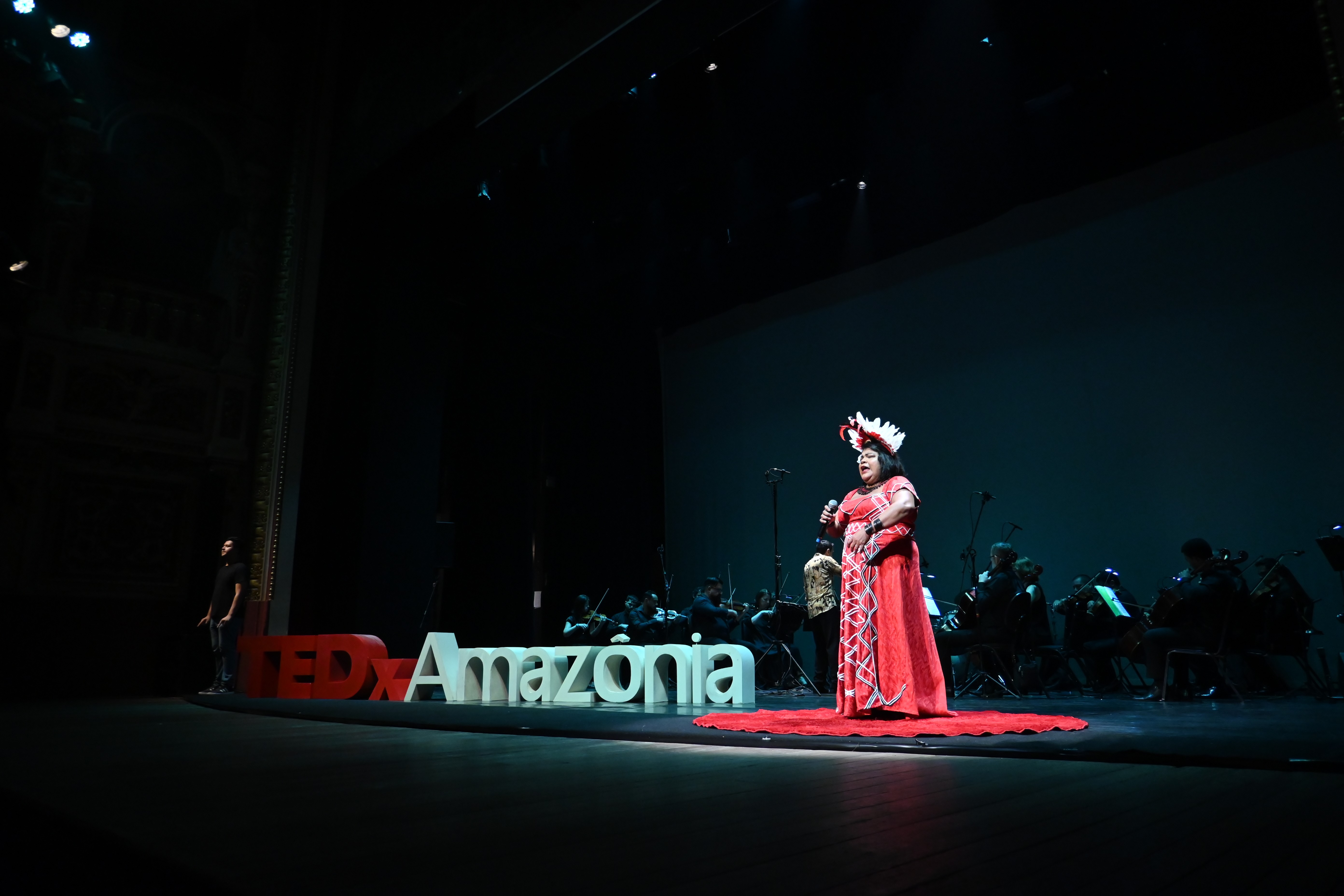
photo: Michel Mello
Action
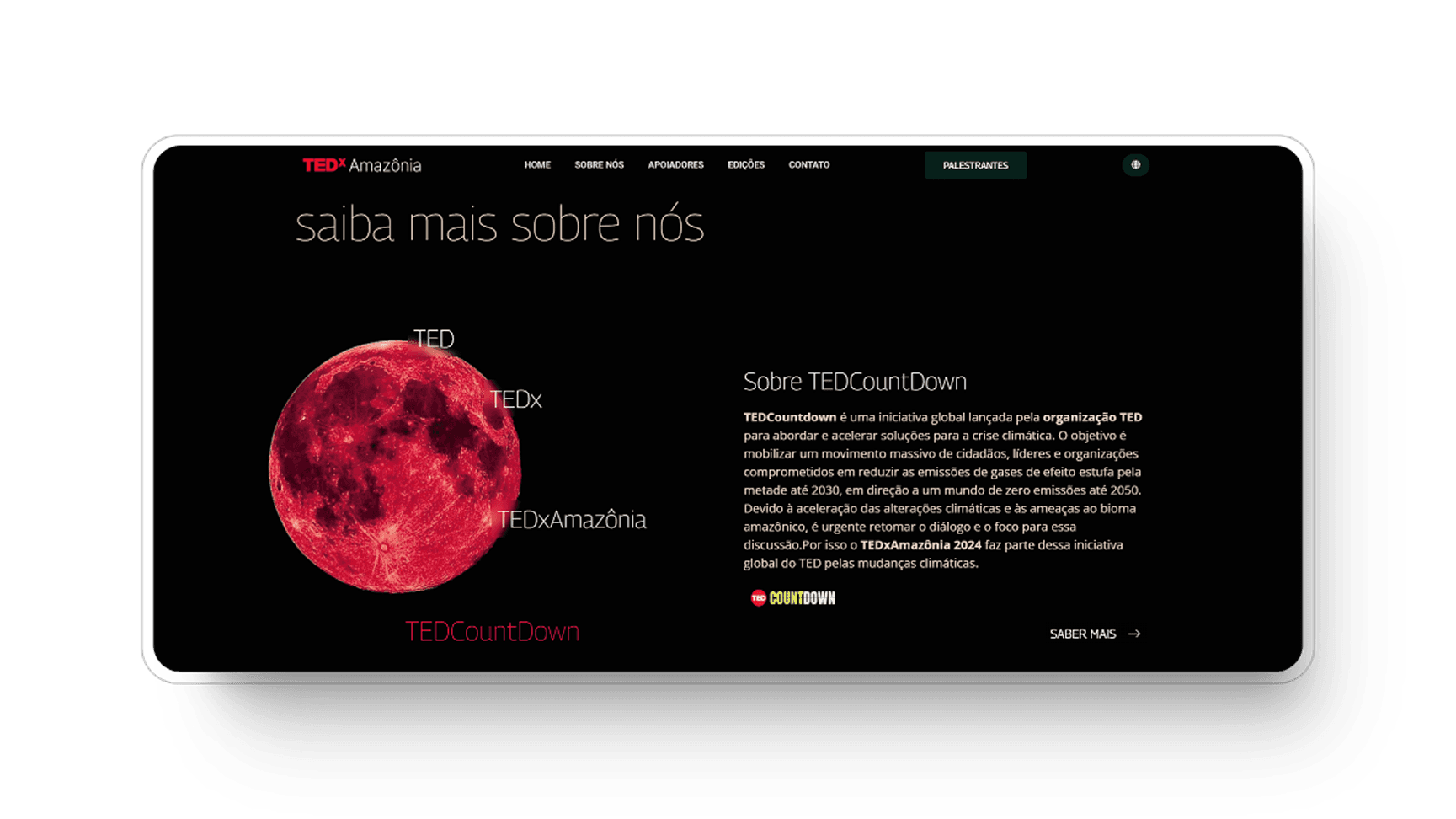
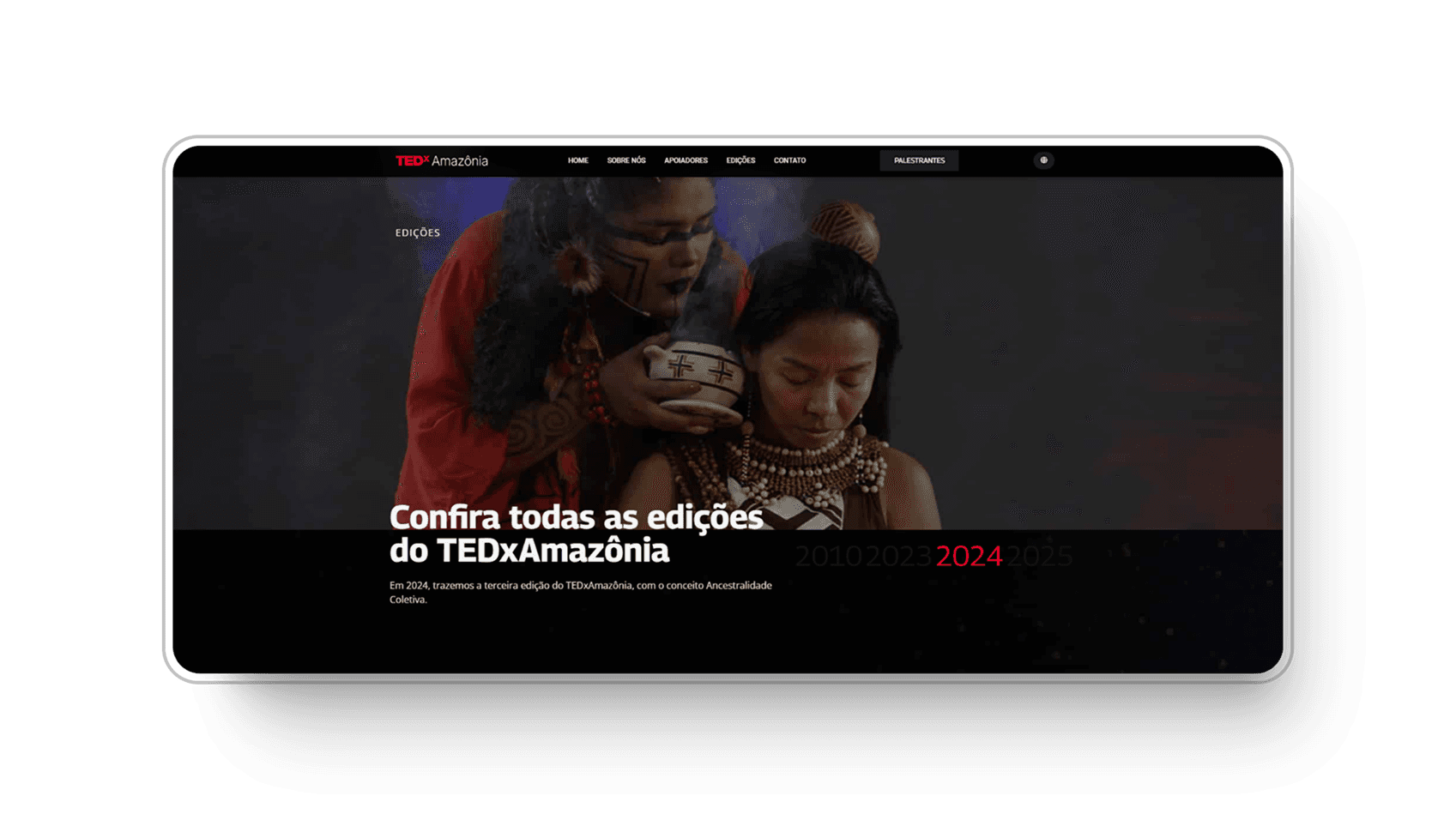
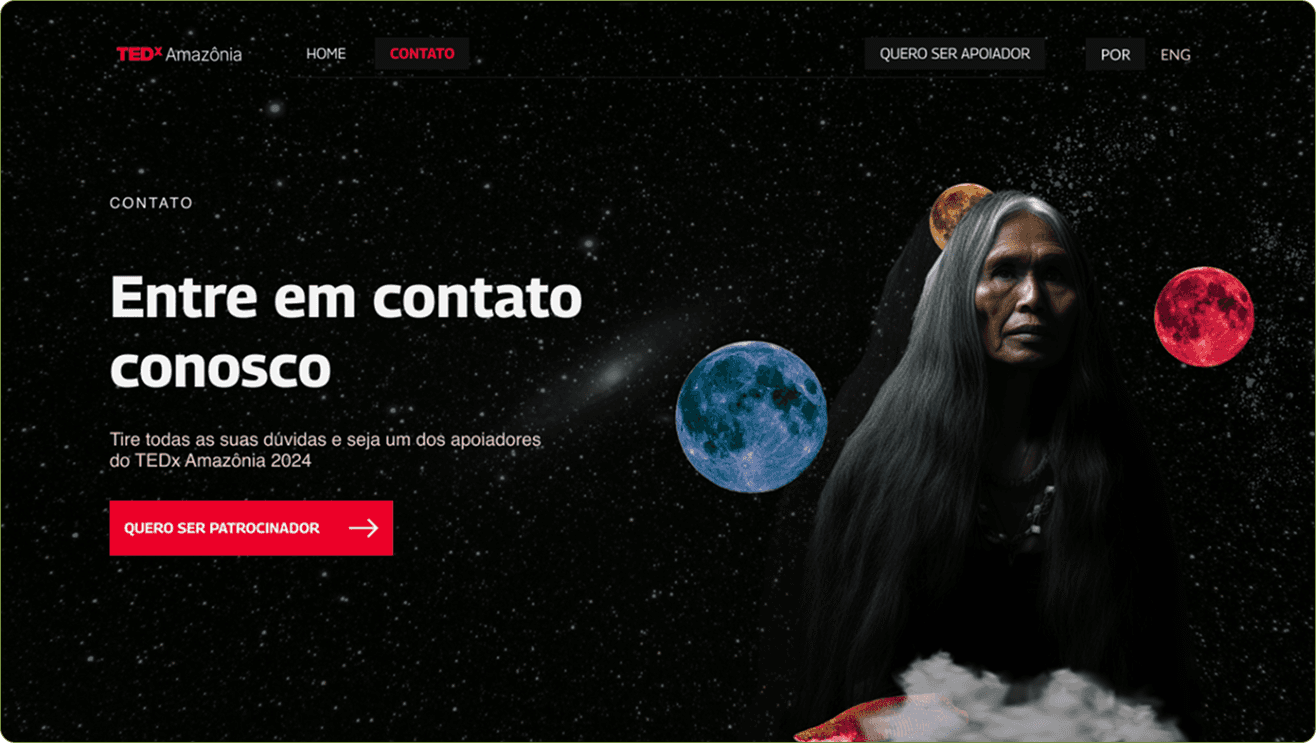
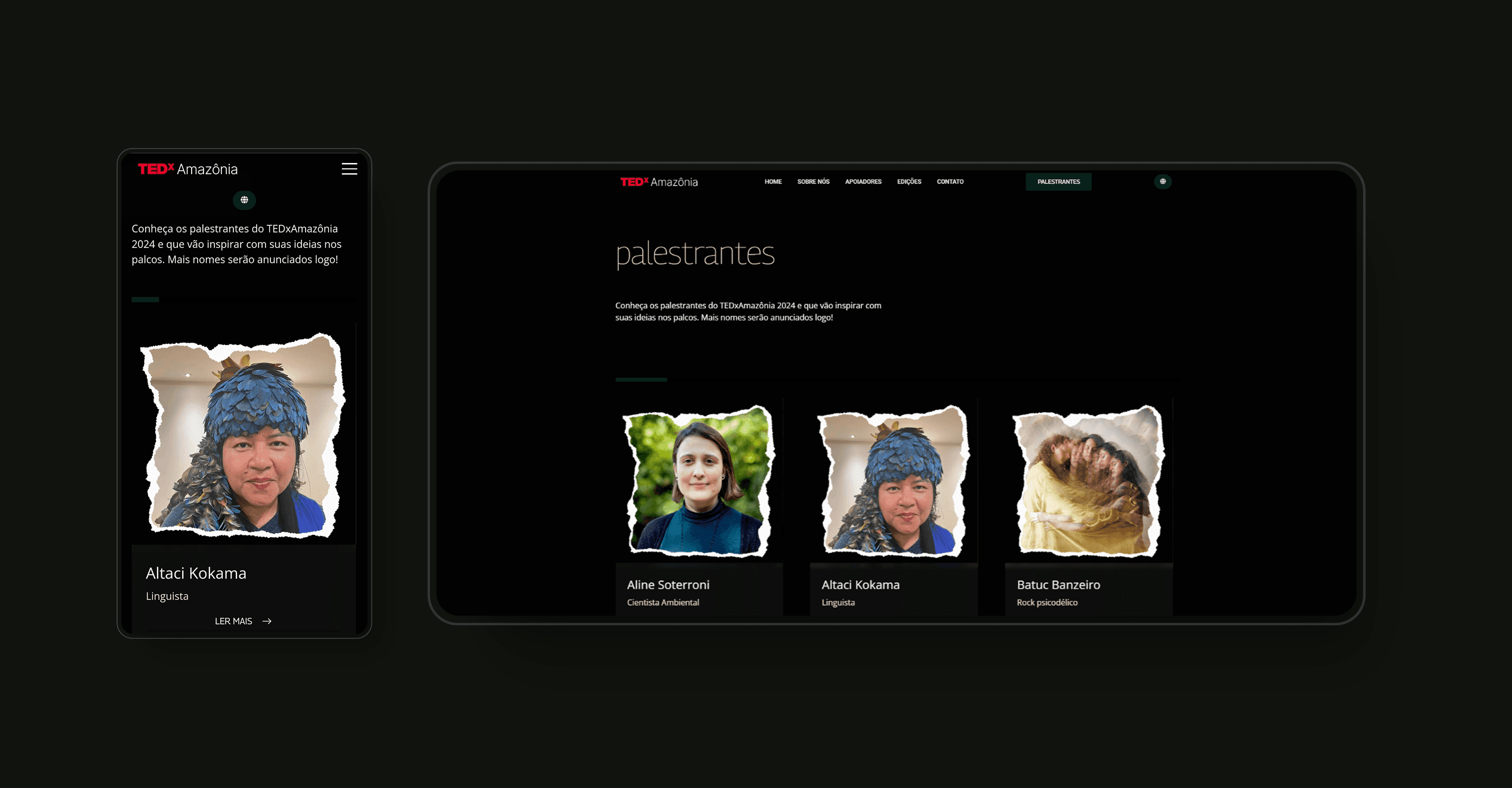
After 3 rounds of card sorting and information architecture testing, the site was restructured into 6 pages (Home, Agenda, About Us, Supporters, Editions, Contact) and designed to evolve across three sequential phases:
Phase 1
Website for Sponsors
The problem here was that the old site gave potential sponsors no reason to believe. There was no value proposition, no sponsorship format options, and no reference to past editions' impact. The solution was a Hotsite focused on the 2023 video case and key data to attract partners for 2024 — the website's first job was to close sponsorships before anything else.
Phase 2
Registration & Volunteer
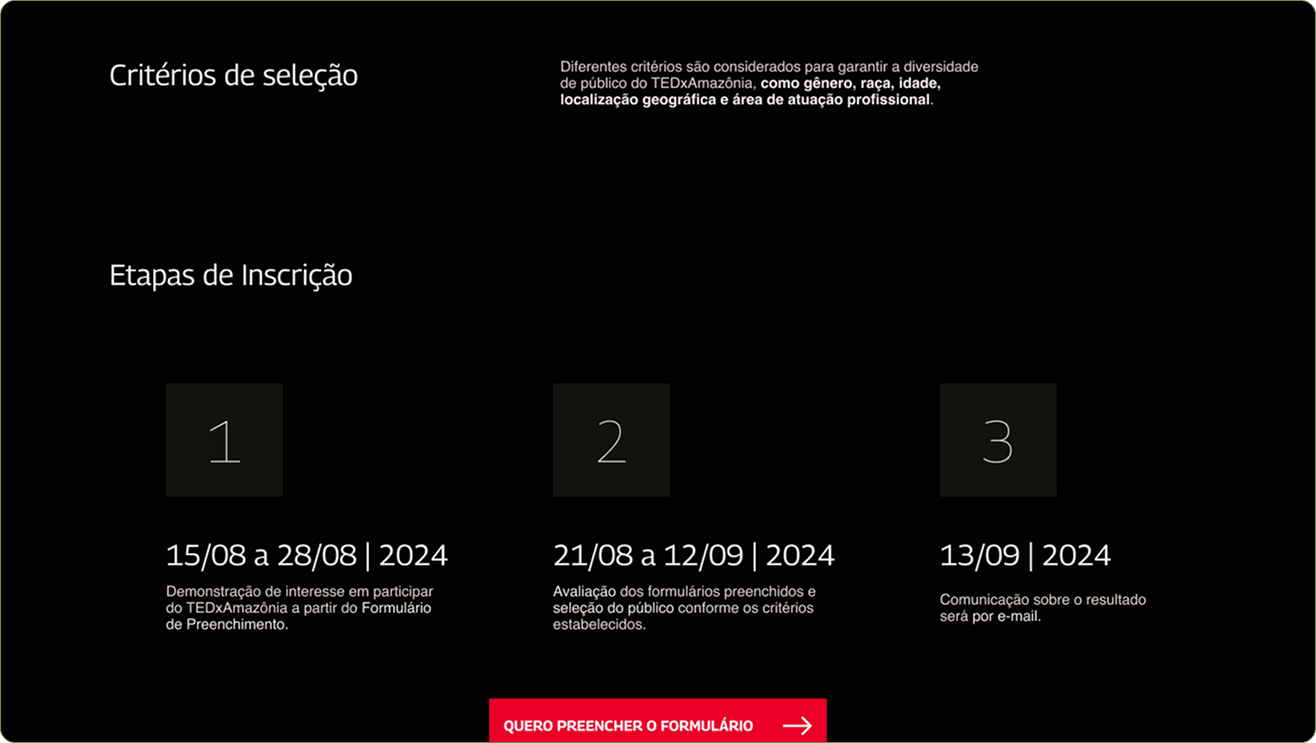
Once sponsors were secured, the priority shifted to the public. The problem was a fragmented and confusing registration flow with no clear entry points for different user types (attendees vs. volunteers). The solution reorganized this moment around clear CTAs and distinct paths, making it easy for both groups to understand next steps and sign up.
Phase 3
Agenda / Event
As the event approached, the website needed to become an operational tool. The problem was that event-specific information — schedule, speakers, location — wasn't prioritized or easy to find. The solution restructured the homepage hierarchy to surface agenda content, speaker profiles, and logistics, giving attendees everything they needed to prepare.
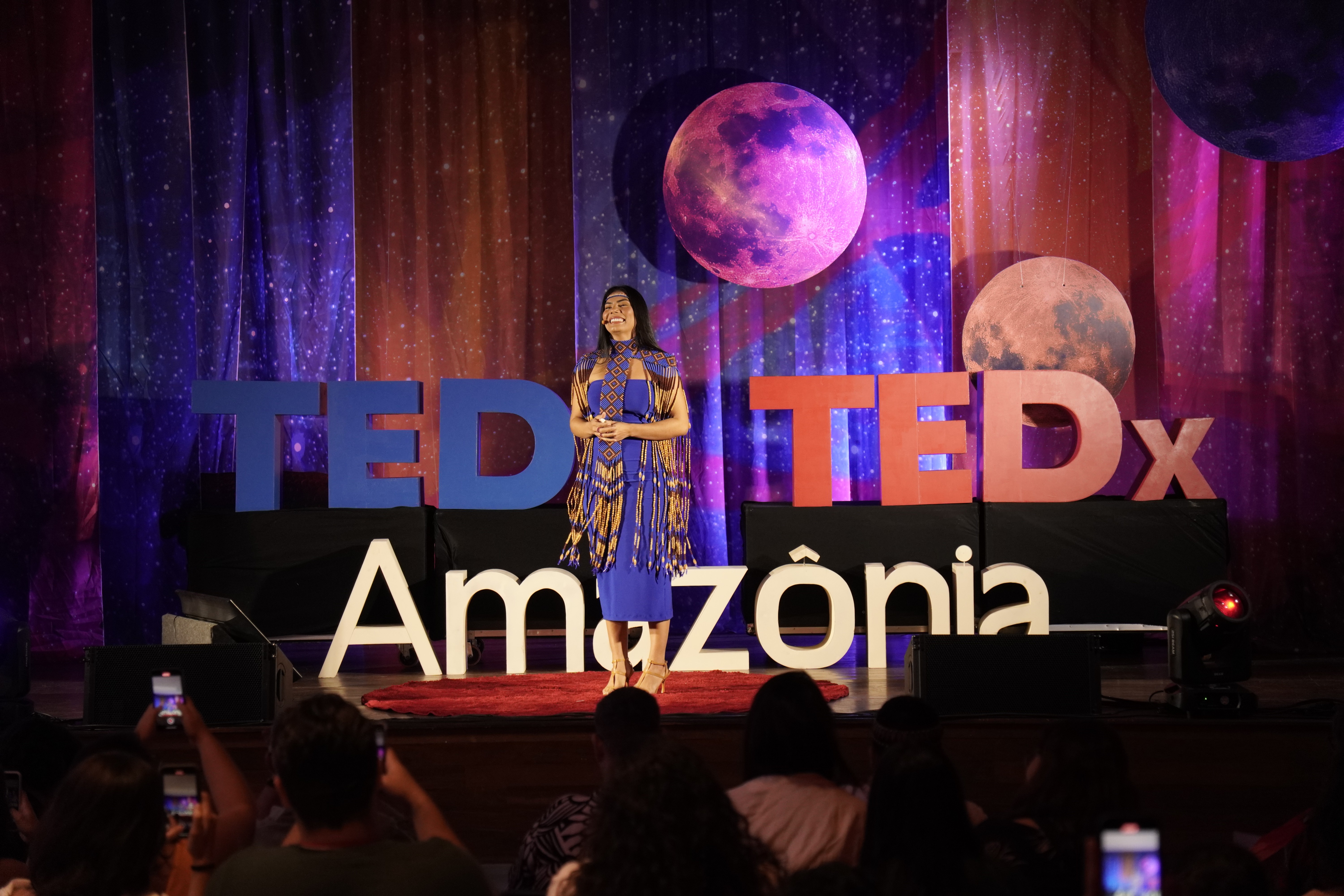
photo: Felipe Martins
result
Impact Numbers
76 speakers, majority from Brazil's northern region
900 total participants across 2023 and 2024 editions
NPS 90 in 2024 (up from 86 in 2023)
9 sponsors across both editions
500M+ reach through media coverage
238.5k Instagram accounts reached in 2024 -a 694% increase vs. 2023
678.2k post views in the 2024 edition alone
400+ articles published in major media outlets
Lessons Learned
Stakeholder access matters. Limited direct communication with the visual identity lead (Moara Tupinambá) made brand application harder than it needed to be.
Don't skip the hard-to-reach users. Sponsors were not interviewed during card sorting — a gap that became clear later, since they were the Phase 1 priority audience.
Measure from day one. Because the old site ran on a different server, baseline metrics were unavailable, making before/after comparison difficult. Defining measurement criteria upfront should be a non-negotiable on the next edition.
Phased design requires phased planning. The 3-moment structure was one of the strongest strategic decisions of the project — but it needs to be mapped from the start, not discovered mid-process.